
A threaded brass insert can enter a plastic part two ways. It can sit in the tool before the shot, or it can be pressed, heat-staked, or ultrasonically installed afterward.
The choice looks like a manufacturing detail. It decides tooling cost, cycle time, scrap exposure, and how many vendors touch the program.
The Case for Insert Molding
Molding the metal in produces the strongest joint available. Resin flows around the knurl and encapsulates it, so pull-out and torque resistance come from geometry rather than from an interference fit.
It also removes an operation. One cycle produces a finished feature, with no downstream press, no fixture, and no second inspection point.
Cost favors it at volume. Insert-loading time folds into a cycle that was going to run anyway, and at high annual quantities the per-part saving against a separate operation compounds.
The Case for Post-Mold Assembly
Tooling gets simpler and cheaper. No insert nests, no shuttle, and no automation placing metal into a hot tool.
Scrap exposure drops in a way that matters more than engineers expect. A short shot on an insert-molded part scraps the plastic and the insert together. On a post-mold part, the insert goes back in the bin.
Flexibility is the quiet advantage. Insert changes, late revisions, and multiple configurations off one tool are all easier when the metal goes in afterward.
Low volume tilts here almost automatically, because insert-molding tooling rarely pays back across a few thousand parts.
How to Actually Decide
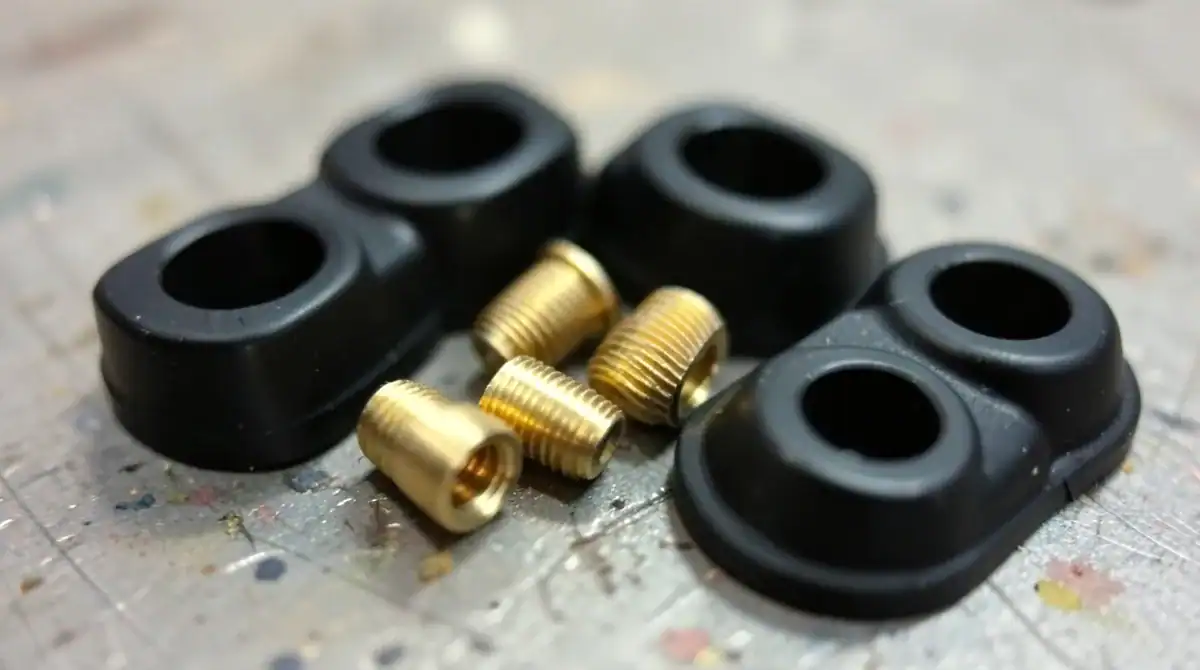
Four questions settle most cases.
What load does the joint see? High torque or repeated cycling points toward insert molding. A fastener installed once points the other way.
What is annual volume? High volume amortizes insert tooling. Low volume rarely does.
How stable is the design? A revision-prone program pays a real penalty for insert tooling.
What is the insert worth? Expensive inserts make scrap arithmetic favor post-mold work.
Thermal expansion sits underneath all four, because metal and thermoplastic expand at different rates and a joint that holds at room temperature can loosen or stress-crack across a service cycle. That constraint applies either way, which is why material selection should precede the insert decision.
Where the Insert Comes From Now Matters
Sourcing entered this calculation in 2026.
New Section 301 tariffs took effect at 12:01 a.m. on July 24, 2026, covering goods from 60 economies at rates of 10% or 12.5%, with several major partners capped net of their most-favored-nation duty. Scope and exemptions are set out in the final USTR notice.
Imported brass and steel inserts are goods of their country of origin like anything else. The action reaches the top 60 U.S. trading partners, covering roughly 99.4% of U.S. imports. An insert that was a rounding error in piece price can move the comparison once duty applies.
The Vendor Question Nobody Asks
Post-mold assembly only saves money when someone performs it. If your molder ships to a secondary house, you have added a handoff, a lead time, and a second quality record.
A molder running assembly on cycle changes that math, because the separate operation stops being a separate address. That is usually the real variable in the comparison.
Polymar performs insert molding, sonic welding, hot stamping, and assembly on cycle in Leola. Bringing the print and the load case to a design review costs less than discovering the answer after the tool is cut.
Frequently Asked Questions About Insert Molding and Post-Mold Assembly
01Can you mold a metal insert into a plastic part?
Yes. The insert is placed in the tool before the shot, and resin flows around it during filling. Knurls, undercuts, and grooves on the insert give the plastic something to grip. The result is a joint whose strength comes from geometry rather than from friction alone.
02Is insert molding cheaper than post-mold assembly?
At high volume it often is, because insert loading folds into a cycle that runs anyway and removes a downstream operation. At low volume the tooling investment rarely pays back. Scrap arithmetic also matters, since a bad shot on an insert-molded part loses the metal too.
03What causes an insert to loosen in a plastic part?
Thermal expansion mismatch is a frequent cause. Metal and thermoplastic expand at different rates, so a joint that holds at room temperature can relax across service temperature cycles. Insufficient wall around the boss, poor knurl engagement, and molded-in stress contribute to the same failure.
04Which is better for low volume, insert molding or assembly?
Post-mold assembly usually fits low volume better. The tooling stays simpler, design revisions cost less, and expensive inserts avoid scrap exposure. Insert molding starts winning as annual quantities climb and the saved operation compounds across the run. Joint load can override both considerations.
05Do imported metal inserts carry tariff exposure?
They can, depending on country of origin and classification. Section 301 tariffs that took effect in July 2026 apply broadly to goods of the covered economies rather than by industry, subject to listed exemptions. Check the current schedule and your specific classification before modeling landed cost.
Polymar: Custom Plastic Injection Molding in Lancaster County
Polymar molds custom plastic components in Leola, Pennsylvania for the medical, automotive, electrical, and fluid transfer markets. We specialize in PET and PBT polyester and run parts from fractions of an ounce to five pounds and up.
Our Capabilities Include:
- Insert Molding and Engineering Resins — Metal inserts, high-tolerance components, CNC closed-loop process control
- Injection Molding Services — Tooling programs, sonic welding, hot stamping, assembly on cycle, EDI
Have a part to quote?
Contact Polymar with your print, your resin, and your volume.
Works Cited
- Office of the United States Trade Representative. “Notice of Actions in Section 301 Investigations of Acts, Policies, and Practices of Various Economies Related to the Failure of Each Economy to Impose and Effectively Enforce a Prohibition on the Importation of Goods Produced with Forced Labor.” Federal Register, 28 July 2026.
- Office of the United States Trade Representative. “Fact Sheet: USTR Section 301 Action in Response to the Failure of 60 Economies to Ban Imports Produced with Forced Labor.” USTR, July 2026.